Data Management Concept in Engineering Projects- Video
Reply
Author : Trudy Curtis Title of article- Improving Trust in Data
Title of Journal : Digital Energy Journal, issue 75, Nov- Dec 2018, pp.14-15
The Statement of the problem centers around the fact that despite huge sums of money spent acquiring analytics, companies are still not able to achieve their objectives due to poor quality of data
The purpose is to highlight first, the need to improve data quality to achieve its analytic objectives and trust among people, while emphasizing on creating the standards required to build that trust, and in my opinion, to create awareness of the existence of and make executives of companies to identify with the PPDM of which the author is its CEO.
While the main ideas and propositions are clear, the article did not mention any tool that may help convert old legacy data and documents from their draft formats into usable data supported by new innovative tools. a lot of the problems encountered in the oil and gas industries today centers around front-end engineering design (FEED) data which these new analytics does not support or synchronize with. For example, millions of data created before Yr. 2000 were in formats in which the tools to access has been retired and no longer supported having been replaced by new IT systems. It becomes an enormous challenge as some oil and gas plant installations have field life of between 30-50 years and still require those project pre-commissioning, commissioning and execution data
Critique the author uses the opportunity at the last PPDM’s London Luncheon to admonish the oil and gas sectors to develop meaningful and data quality standards, with an objective she says could be described as “turning data management from a “Me” world, where companies only do work which is in their interests to do, to a “We” world, where the industry works together to keep data well managed, and treat data as a strategic business asset”. Here, I see the author as trying to sell a product / service rather than making a case to drive data quality, since one can only trust what one is sure of.
Her assertion for the need for consistency of data managers and data scientists who would have a good understanding of the data they are working with, and, often encounter problems with data is highly supported, however, there is an urgent need to advance and professionalize the skill pool of the data managers who often times are not regarded as key contributors in the oil and gas production line despite the important role they play across the project phases. Her definitions of the three mechanisms for building trust in data resonates with me, and it will be a double win situation to have global standards for managing data such as the DEP (Design Engineering Practice), ISO 8000 (International Standard for Data Quality) and the EIS (Engineering Information Specification) to benchmark organizations’ data practice against established standards.
In conclusion, there are several other challenges facing data and how they are managed, such as theft, privacy, creating then right topology and architecture around how we map data for indexing and storage. Data can only be properly managed when the right people, process and technology are aligned.
References
Curtis, T. 2018. Improving Trust in Data. Digital Energy Journal, issue 75, Nov- Dec 2018, pp.14-15
Kwon, O., Lee, N. and Shin, B., 2014. Data quality management, data usage experience and acquisition intention of big data analytics. International journal of information management, 34(3), pp.387-394.
Tayi, G.K. and Ballou, D.P., 1998. Examining data quality. Communications of the ACM, 41(2), pp.54-57. Weidema, B.P. and Wesnaes, M.S., 1996.
Data quality management for life cycle inventories—an example of using data quality indicators. Journal of cleaner production, 4(3-4), pp.167-174.
A critique of Smart, A. ‘Digital “needs to be led by people who understand it”
Author: Andrew Smart Title of article: ‘Digital “needs to be led by people who understand it”
Title of Journal: Digital Energy Journal, Iss. 75, Nov- Dec 2018, pp.13
Introduction
In this article, Andrew Smart (2018) attempts to expound on the needs not just for digital technology in the oil and gas industry, but for the need to also ensure that the workforce is engaged and equipped to make use of these technologies to drive company performance upward.
His idea centers primarily around the idea that companies in the oil and gas industry can improve their processes and standards by employing the right use of digital technology accompanied by trained and skilled personnel. While his main ideas and propositions are clear, the article could have benefited from a more cohesive and logical structure as well as some research-based evidence to corroborate the writers’ assertions.
Critique
The article was written in a style more congruent with non-academic literature as the writer appears to be speaking largely based on experience and professional opinion.
It was centered mainly on the oil and gas industry with an overwhelming suggestion that the readers are familiar with many of the terms and examples given. Smart (2018) discusses an important topic of embracing digital technology.
This topic has several applications not just in the oil and gas industry but in many other industries such as Telecommunications, Fashion and Entertainment . However, the article starts with a paragraph that throws you off as it appears unrelated to the topic or the abstract of the article.
There is a mention of switching roles from offshore to onshore as happened in the preceding round of “integrated operations” projects (paragraph 1, line 5 – 6). It appears that the author is citing a specific example but with no clear reference, it is difficult to say.
The author then goes on to advise, and quite soundly that companies could change the way they do engineering to make it more simplified and standardized which will eventually lead to better predictability in how projects are executed (paragraph 5, line 6 -7). This paragraph would have been better if it was made clear exactly what changes companies could implement to reap the stated benefits or better still, given a specific example of a company who has reaped these benefits already.
The 7th paragraph also begins with a broad sweeping statement that a ‘big challenge with digital technology in the oil and gas industry is being able to get the systems deployed at scale’. In other words, the ability to broaden the applications of the system once it has been found to work in a specific area poses some challenges for companies. The examples given are unspecific and uncorroborated – the only credence one can lend to such assertions is the fact that the author is the Managing Director at one of the worlds’ leading firms in Energy and as such will have some insights into what is being said.
The oil and gas industry has indeed formed a consensus that digital technology is important, however the article could have taken this opportunity to highlight existing industry reports or articles that support this notion. Articles such as – ‘The role of innovation and technology in sustaining the petroleum and petrochemical industry’ from the Technological Forecasting and Social Change and the article on Smart thinking – cognitive computing with Repso’ would have supported the idea better.
In my role as an industry professional in the oil and gas industry, I can attest to the consensus on digital technology and its opportunities for significant business improvement having witnessed a noticeable focus on digitization and its benefits. In 2018, I was head of a project to digitize all legacy/old hard copied documents in my organization to centralize access to documents which in turn resulted in faster decision making and ultimately improved business performance.
Another key area of note in this article is the paragraph on leadership engagement and determination as a precursor to company efficiency and agility (paragraph 9, line 8 – 10) to which I am inclined to agree. The role of leadership cannot be over-emphasized in relation to attempting any change in an organization. (Kotter, Rathgeber 2006).
The section on ‘Working Better’ can be summarized by the last paragraph in that section which states that “digital technologies offer cost and performance improvement to all forms of analytical activity…” (paragraph 18). This would have been a clearer way to pass the intent of the message than the preceding paragraphs which was presented in a manner that did not appear cohesive or related to the section prior.
In passing across messages, I would expect that words are only used to the extent that they are required to convey the message. This section also speaks on “conventional” and “unconventional” industries to which no clear definition of these industries was supplied.
The last section of the article advices that companies employ “digital improvement managers” whose primary task will be to keep abreast of digital technology trends with a view to seeing how their companies can improve their processes and standards. This is in line with Smart’s (2018) idea that Digital “needs to be led by people who understand it”, in this case Digital Improvement Managers. While organizations may choose to designate the job title with some other choice of words, the main idea behind the suggestion is that specific people are empowered and employed to take on the role of managing a company’s digital space.
Summary
In summary, the writers’ position is clear on the need for digital technology in companies to be led by people who understand this technology and have been empowered to use them. He also states that it is not simply a matter of adding technical resources, but it is about engaging the entire workforce and leadership in the new ways of working to achieve the desired performance.
The article was clear in its main idea but lacking in the supporting evidence to back up the main points. The reason for this evaluation is based largely on a lack of any referenced research or article to support the writer’s key statements.
My recommendations for improvement will be mostly in line with most of the negative critique in this submission. The writer should not make assumptions that the readers are familiar with the industry in question or the examples being cited. The writer should take the time to cite specific examples and explain any commonly used industry term that may not be immediately apparent to a person outside the industry. The writer should take the time to set out a clear and cohesive outline to enable a better flow of the thoughts and messages being passed across.
Lastly, I would advise that the writer be clear on what key message he or she intends to pass and takes out any sentences, paragraphs or words not required to properly convey the message.
References
Hassani, H 2017, ‘The role of innovation and technology in sustaining the petroleum and petrochemical industry, Technological Forecasting and Social Change, vol. 119, pp. 1-17
InnovOil, 2016, ‘Smart thinking – cognitive computing with Repso’, Issue 44
Kotter, J 2006, Our Iceberg is Melting, 10th edn. Macmillan, UK
Smart, A 2018, ‘Digital “needs to be led by people who understand it”, Digital Energy Journal, iss. 75, pp. 13
Author:Eric Carpenter and Alexandra MacMurchie
Title of article:Data Governance
Publication: Rand Secure Data; Mar 10, 2014
Abstract/Summary: The Presenters started by highlighting the fact that many companies struggle to get their data under control even as data continues to grow exponentially, while IT budget are reduced. They advised that having an understanding of data governance and its components will help organizations drive better value for their data
They defined Data Governance as the practice of defining the standards, principles, process and technology that an organization will rely on to manage its data.
A comprehensive data governance strategy will satisfy regulatory requirements, ensure business continuity and drive search and retrieval, and reiterated that at the cross section of data is people, process and technology
Three components of data mentioned are-
1. Back-ups- helps retrieve data for use when lost or needed
2. Archiving- structured and unstructured data can be captured and indexed for retrieval and use when needed
3. e-discovery is the gathering of electronically stored data for litigation and legal requirements and helps to know when data stored has been tampered with
Critique
Conclusion
I find the topic very useful, especially as there are many kinds of information systems that are capable of scanning, storing and archiving large data into the computers and other storage databases. It means that this risk of losing legacy documents which were generated prior to the digital age would be minimal, and also, I agree that every organization, irrespective of its size, should have a Data Governance model as minimum to set the pace for standards and ensure data quality, protection and control, as well as reduce search time since the govern would lay down procedures for building data hierarchy, architecture and a good indexing pattern when the right tools are deployed
Reference- https://www.youtube.com/watch?v=t4IOS5csv40
Author: Google Cloud
Title of article: Google Security
Publication: Airman Magazine
Abstract/Summary:The author who is a cloud Pioneer, introduces this paper by boasting Goggle cloud services as “designed to deliver better security than many traditional on-premises solutions” focusing on security and protection of data.The author believes that apart from cost savings benefits, people now look to Google cloud for security benefits. The writer identified and listed Google’s security policies which includes the following:
Google’s Security Culture
Operational Security
Technology with Security at its core
Independent third-party certifications
Data Usage
Data Access and Restrictions
Critique
Conclusion
This article was significant, and I am convinced that Google provides top-notch
security for all its Cloud customers. This is because Customer’s data
protection is a fundamental design consideration for all Google’s
infrastructure, products and personnel operations. Also, I have np0 doubt that
Google’s level of data protection exceeds that of most public cloud providers
in the globe. Google is committed to ensuring the control of everyone over
his/her data. No wonder over 64 percent
of Fortune 500, trust Google with their most asset.
Author: Joseph Eddins
Title of article: No longer pie in the sky
Publication: Airman Magazine
Abstract/Summary: The author believes that cloud computing is a modern approach for data storage but is faced with several challenges that he would like to see tackled and resolved. In the article “No longer pie in the sky” Joseph Eddins emphasizes the relevance of cloud computing to the defense infrastructure, while identifying key steps to approach cloud adoption.
He also identified challenges agencies face in adopting new technologies and recommended some change eements attitude towards the challenges:
Non technical Blockers
Technical Blockers
He also identified the payoff of adopting cloud computing.
Critique
Conclusion
This article is significantly relevant, on time and fit for purpose given that big data, cloud computing and storage, internet of things (IoTs) are now key business drivers and value optimizers.
I completely agree with the Author’s opinions. Presently, the need to accept and migrate to cloud computing can not be over emphasized. The starting point for recognition would be, as he said, for the various companies to get started, assemble a capable team made of the right people early in the process that will understand the stakeholders and the impact of cloud computing.
Both the technical and non-technical impediments should be investigated and understood as highlighted and provided with the right solutions.
There is need for scope expansion however, to highlight and bring to the fore the several challenges with big data storage, cloud computing, data privacy and security issues whch has led to huge financial loss and integrity
Finally, there should be increased awareness concerning cloud computing through more seminars, webinars and university courses. This will provide sound knowledge about cloud computing.
Reference
Brodkin, J., 2008. Gartner: Seven cloud-computing security risks. Infoworld, 2008, pp.1-3.
There is so much enthusiasm when it comes to all things digital. The difference that digitalisation is making in the Oil and Gas asset management, engineering modifications, production optimization, drilling, wells and reservoir facilities management, employee competences and capability, business decisions and their value-added outcomes are overwhelming.
The introduction of real-time optimisation, 360-degree asset visualisation, 3D printing, laser scanning, ROV technologies have seen oil and gas projects and operations improvements that was never imagined a decade ago.
What is information?
Information is communication via natural language, as well as communication through art, facial expressions, gestures as well as other physical responses, simply put, information is data that is given meaning by its context

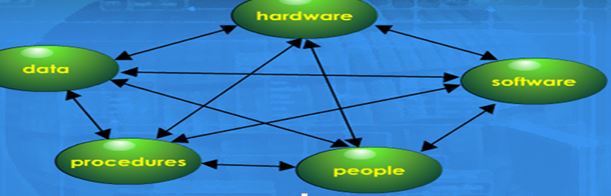
Information Systems are integrated sets of components for collecting, storing, and processing data and for providing information, knowledge, and digital products. They allow businesses, firms and other organizations to function effectively while managing their operations, interacts, as well as compete in the marketplace, key elements of information systems are people, equipment, procedures and data
Types of Information Systems Oil and Gas Projects
1. Transaction Processing Systems (TPS) serve the operational level of an organization by collating and storing information about transactions while controlling some aspects of transactions.
2. Knowledge work systems (KWS) is used by technical staff as model functions to convert design specifications into graphical designs, using computer-aided design/manufacture (CAD/CAM/EDMS/SAP).
3. Office automation systems (OAS) serve those that belong to the knowledge level of an organization to process personal and organizational data, perform calculations, and create documents. e.g. word processing, spreadsheets, file managers, presentation packages.
4. Decision-support systems (DSS) help the strategic management staff in decision making.
5. Management information systems (MIS) serve the management level of the organization. It condenses and converts the TPS data into information for purposes of monitoring performance and organization management
6. Executive support systems (ESS) serve the strategic level of an organization. Provides readily accessible, interactive format to get the overview of the organizations performance.
Benefits

Challenges
Data theft due to hacking, malware threats and virus attacks, privacy and confidentiality issues, unauthorized use and publication of customer personal information, raising questions about the integrity and sustainability of the information Systems
References
Albana, B.Q., & Mihane, B.N. (2013). Improving Decision Making with Information Systems Technology–A theoretical approach. Iliria International Review. 2013. 49-62. doi: 10.21113/iir.v3i1.96.
Azad, M.M., Amin, M.B., & Alauddin, MD. (2012). Executive Information System. International Journal of Computer Science and Network Security, 12(5), 106-110.
Bourgeois, D., 2014. Information systems for business and beyond. The Saylor Foundation.
Bratvold, R.B., Bickel, J.E. and Lohne, H.P., 2009. Value of information in the oil and gas industry: past, present, and future. SPE Reservoir Evaluation & Engineering, 12(04), pp.630-638.
Cronholm, S. and Goldkuhl, G., 2003. Strategies for information systems evaluation-six generic types. Electronic Journal of Information Systems Evaluation, 6(2), pp.65-74.
David, T.B. (2014). Information Systems for Business and Beyond. Washington, DC: Open Textbook Challenge by the Saylor Academy.
Huber, M.W., Piercy, C.A., & McKeown, P.G. (2007). Information Systems: Creating Business Value. Hoboken, NJ: J. Wiley.
Peppard, J. and Ward, J., 2016. The strategic management of information systems: Building a digital strategy. John Wiley & Sons.
Rainer, R.K., Turban, E., & Potter, R.E. (2007). Introduction to Information Systems. Hoboken, NJ: John Wiley & Sons.
Digitalization is turning business processes from physical or manual activities into automated or digitalized processes. However, digitalization cannot generate value without the element of People and Process that facilitate the flow of information from creation, usage and archive-destroy
Digitalizing a management system requires a significant transformation in a company’s approach to work. Changing processes and behaviors is never easy, but imbibing certain principles can set the right context for the necessary transformation
In the Oil and Gas sector as in other industries, embracing technology is not the major challenge, human behavior is a significant factor in the success or failure of projects. The need to improve operations with new digital technologies while maintaining focus on the core business and how to engage employees and stakeholders into applying digital technology in ways that delivers real value and operational excellence to simplify complex processes at reduced cost is key

The following measures would suffice to ensure organization-wide support for digitalization
References
Berman, S.J., 2012. Digital transformation: opportunities to create new business models. Strategy & Leadership, 40(2), pp.16-24.
Brennen, J.S. and Kreiss, D., 2016. Digitalization. The international encyclopedia of communication theory and philosophy, pp.1-11.
David Vlok (2017) Human Behavior-A Challenge to Digitization- https://imagenevp.com/blog/human-behaviour-challenge-digitization/
The concept of Digitization in the Oil & Gas industry is mostly focused on the implementation of data-driven solutions to simplify processes, enhance efficiency, boost performance, stay ahead of the competition and ultimately reduce costs.
To digitize is to create, use, maintain, store, communicate, retrieve, archive or destroy. Data in all of its forms are being processed(digitized) and stored into a single unit called computer/Cloud.
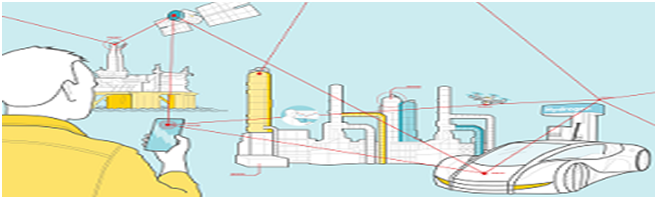
The industry, like other enterprises, government agencies, NGOs, academic institutions etc. are going through a “digital transformation,” turning digitization into new processes, activities, and transactions to create high earned values
Some key benefits of digitalization in this industry include-
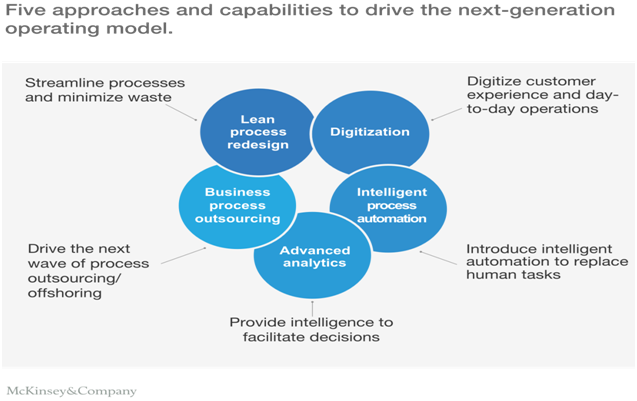
To harness and capture its values for efficiency-
References
Berman, S.J., 2012. Digital transformation: opportunities to create new business models. Strategy & Leadership, 40(2), pp.16-24.
Bollard, A., Larrea, E., Singla, A. and Sood, R., 2017. The next-generation operating model for the digital world. Digital McKinsey”, March.
Brennen, J.S. and Kreiss, D., 2016. Digitalization. The international encyclopedia of communication theory and philosophy, pp.1-11.
Gimpel, H., Hosseini, S., Huber, R., Probst, L., Röglinger, M. and Faisst, U., 2018. Structuring digital transformation: a framework of action fields and its application at ZEISS. Journal of Information Technology Theory and Application, 19(1), pp.31-54.
Gray, J. and Rumpe, B., 2015. Models for digitalization.
Parviainen, P., Tihinen, M., Kääriäinen, J. and Teppola, S., 2017. Tackling the digitalization challenge: How to benefit from digitalization in practice. International Journal of Information Systems and Project Management, 5(1), pp.63-77.
Pearlson, K.E., Saunders, C.S. and Galletta, D.F., 2016. Managing and using information systems, binder ready version: a strategic approach. John Wiley & Sons.
Porter, M.E. and Millar, V.E., 1985. How information gives you competitive advantage.
What are the most significant things I have learned during this session
What questions remain uppermost in my mind?
Is there anything else I do not understand?

 Information Systems