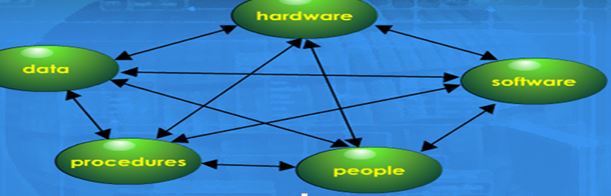
The concept of Digitization in the Oil & Gas industry is mostly focused on the implementation of data-driven solutions to simplify processes, enhance efficiency, boost performance, stay ahead of the competition and ultimately reduce costs.
To digitize is to create, use, maintain, store, communicate, retrieve, archive or destroy. Data in all of its forms are being processed(digitized) and stored into a single unit called computer/Cloud.
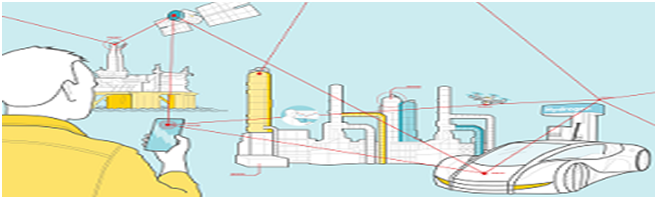
The industry, like other enterprises, government agencies, NGOs, academic institutions etc. are going through a “digital transformation,” turning digitization into new processes, activities, and transactions to create high earned values
Some key benefits of digitalization in this industry include-
- Engenders value (simpler, fast and more cost efficient increased productivity)
- Enables the innovation that creates the energy future through systems engineering from concept to operation, increase collaboration with EPC’s, real time rig automation and micro KPI’s to drive performance improvement
- Empowers the people to do much more (remote operations, AI & Robotics, integrated engineering, complex predictive analytics, complex multi-tasking) was not possible a decade ago
- Helps to decentralize information and creates interrelationships among industries that were previously separate
- Enables real-time decisions, reduce equipment failure, increase safety, minimize downtime in wells and reservoir management, piping, pipelines activities, drilling and production optimization and reduce wastage, resulting in a complete plant automation
- Increase effectiveness of design offices through common global strategy, vendor catalogue, synchronization of engineering tools to support construction management, commissioning, start-up, execution, completion and project handovers.
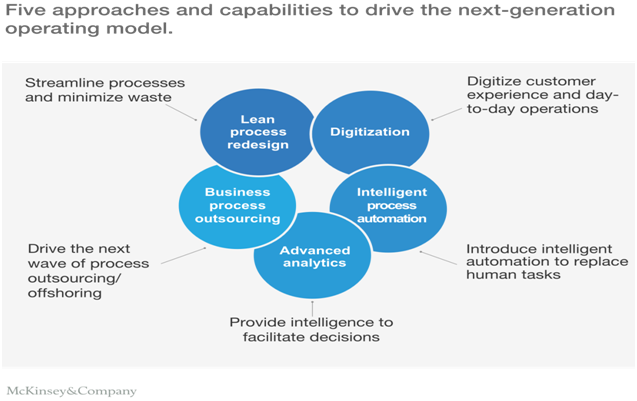
To harness and capture its values for efficiency-
- Digitization must be owned by the business, supported by the Leadership and, driven by experts in the Digital Centre of Expertise and IT
- The organization must embed the system into its operations, from top-bottom to spur employee positive reaction, mindset and commitment by making it accessible and relevant
- Team collaboration- the IM/IT teams must demonstrate the discipline and readiness to ensure solid governance
- Organizations must consider the challenges of change implementation, discipline and compliance which goes beyond the technology itself, but synchronize with existing tools, protocols, and processes to ensure to maintain infrastructure for flow assurance
- Companies must understand that adding new elements to a process can create complexity especially for companies with a long history of how things are done and who have been working in similar ways for decades.
References
Berman, S.J., 2012. Digital transformation: opportunities to create new business models. Strategy & Leadership, 40(2), pp.16-24.
Bollard, A., Larrea, E., Singla, A. and Sood, R., 2017. The next-generation operating model for the digital world. Digital McKinsey”, March.
Brennen, J.S. and Kreiss, D., 2016. Digitalization. The international encyclopedia of communication theory and philosophy, pp.1-11.
Gimpel, H., Hosseini, S., Huber, R., Probst, L., Röglinger, M. and Faisst, U., 2018. Structuring digital transformation: a framework of action fields and its application at ZEISS. Journal of Information Technology Theory and Application, 19(1), pp.31-54.
Gray, J. and Rumpe, B., 2015. Models for digitalization.
Parviainen, P., Tihinen, M., Kääriäinen, J. and Teppola, S., 2017. Tackling the digitalization challenge: How to benefit from digitalization in practice. International Journal of Information Systems and Project Management, 5(1), pp.63-77.
Pearlson, K.E., Saunders, C.S. and Galletta, D.F., 2016. Managing and using information systems, binder ready version: a strategic approach. John Wiley & Sons.
Porter, M.E. and Millar, V.E., 1985. How information gives you competitive advantage.
 Information Systems